|

|
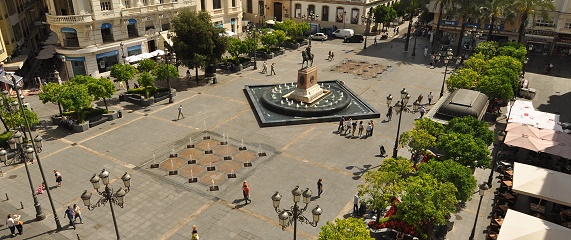
Plaza de la Corredera
Plaze de la Corredera, or Corredera Square, is one of the most magnificent venues in town. This large rectangular features an architecture unparalleled in all Andalusia. It is a famous spot with locals and tourists who enjoy to spend time on one of the open air terraces there.
More Information
|
|

|
Plaza del Potro
(Filly Square)
This square got its name from a font which was built in 1577. This fountain is topped by a filly, so the folks henceforth named the square as “square of the filly”.
It is one of the more significant sites in town, because the old Potro Inn (Posada del Potro) is situated there. The Potro Inn was already mentioned in Miguel de Cervantes’ “Don Quixote”.
More Information
|
|

|
Calleja de las Flores
The so called Alley of Flowers is one of the most picturesque places in Cordoba and a popular tourist destination. The flowers hanging from the walls are lovely. The best time to visit is in late spring, when cranesbills on the walls are in their full bloom.
More Information
|
|

|
Tendillas Square
Situated between the old Jewish quarter and the new modern central district, this square is a popular meeting point and a place where people like to stay for awhile and have a drink or dinner. The site is dominated by a large equestrian statue of Gran Capitan.
More Information
|
|

|
Calleja del Pañuelo
Actually this alleyway ranges among the most narrow streets in Spain and even in Europe. Therefore this alley is commonly nicknamed as Handkerchief Alley. It is located just off the Mezquita Cathedral.
More Information
|
|

|
Cuesta del Bailio
This slope is one of the most emblematic places in the old town and therefore a favored spot for taking pictures. Way back, this picturesque passage crossed the Roman city wall, linking historic uptown and downtown.
More Information
|
|

|
Plaza de los Capuchinos
Visitor guides usually indicate this square one of the most impressive in town. In fact, it is probably one of the smallest ones. Anyway, this site is more remote and therefore not crowded by tourists. The square is home to a beautiful Christ statue which is surrounded by several lanterns. The site is most enchanting at nightfall when the lanterns are illuminated.
|
|

|
Plaza Jerónimo Páez
Once, this square was home to the third largest amphitheater of the Roman empire. Its excavated remains were integrated into the construction of the Museum of Archaeology which is located here. On the square itself, a number of findings are on display, including fragments of ancient Roman columns.
|